
Clinical Scope: Removes plaque and tartar from tooth surfaces above and just below the gum line. Appropriate for patients with healthy gums or mild gingivitis.
Pocket Depths: 1–3mm (healthy range)
Performed by: Dental hygienist, no anesthesia needed
Frequency: Every 6 months for healthy patients
Clinical Scope: Removes bacterial deposits and calculus from root surfaces deep below the gum line. Smooths root surfaces so gum tissue can reattach. Designed to halt bone loss and arrest periodontitis.
Pocket Depths: 4mm+ (disease threshold)
Performed by: Dental hygienist or dentist, local anesthesia used
Frequency: Once to treat; then 3–4 month maintenance
When pocket depths exceed 4mm, bacteria colonize below the gum line where a standard cleaning cannot reach. Those bacteria continue destroying bone and connective tissue between appointments. Scaling and root planing removes the bacterial source — a regular cleaning manages the surface, not the infection.
SRP is typically completed in two appointments (one per half of the mouth or by quadrant). Local anesthesia is applied dynamically to block pain loops, ensuring a fully relaxed therapeutic session. Scaling removes calcified calculus and harmful bacteria from the root surfaces down to the baseline of each periodontal pocket. Root planing then smooths out rough cementum areas to eliminate residual structural toxins, directly encouraging your soft tissues to reattach and form a tight seal against future bacterial invasion. A brief follow-up evaluation is scheduled 4 to 6 weeks later to check your pocket reduction progress.
Local anesthetic applied to the area being treated. You'll feel pressure but no pain. We check in throughout.
Calculus and bacterial deposits removed from all root surfaces — from gum line down to the base of each periodontal pocket. Ultrasonic and hand instruments used.
Root surfaces smoothed to remove residual bacterial toxins and create a clean surface gum tissue can reattach to and seal against future invasion.
4–6 weeks after treatment, pocket depths and healing reassessed. Most patients respond well — some may require additional treatment for persistent pockets.
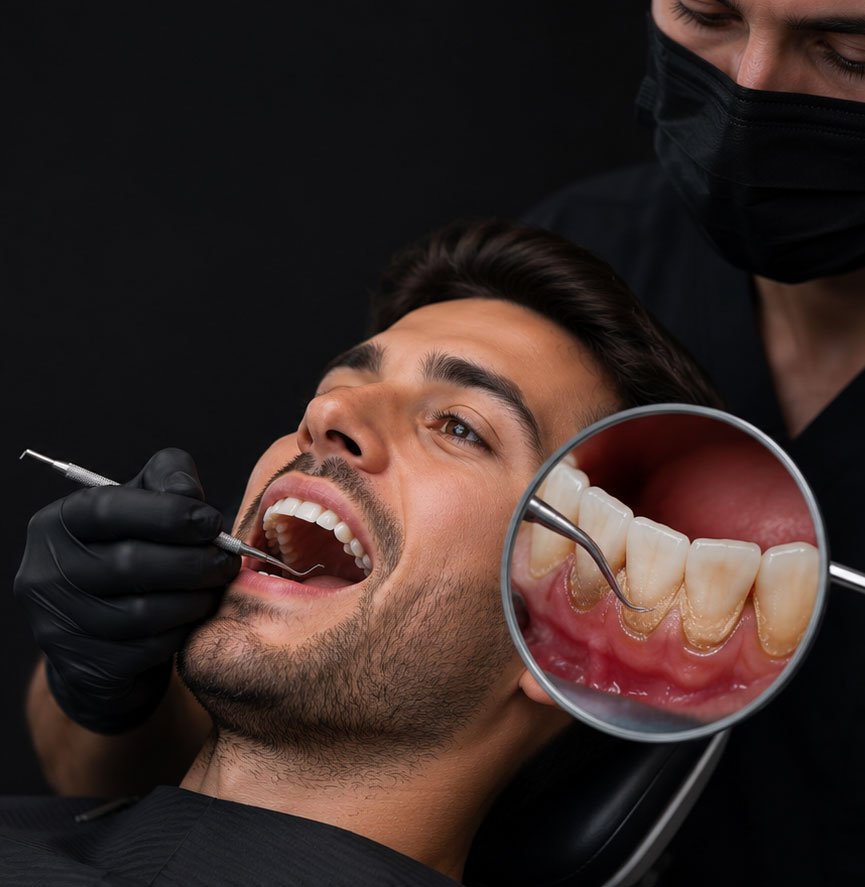
Gum tissue tightens and reattaches over 4–6 weeks. Pocket depths typically decrease by 1–2mm. Bleeding on probing reduces significantly in most patients.
Every 3–4 months — not a regular cleaning. Monitors pocket depths, removes bacteria from treated areas, catches any reactivation early.
SRP works best when supported by excellent home care. We review and customize your brushing, flossing, and interdental cleaning technique at treatment appointments.
SRP quality varies significantly by operator. We take the time to complete each quadrant thoroughly — not rushing through this technique-sensitive procedure.
Local anesthesia is always used. We check in throughout and adjust as needed. Patients are regularly surprised by how comfortable SRP can be.
We track your periodontal measurements over time and compare results at every maintenance appointment — so you can see your progress in real numbers.
[google_reviews]
Done under local anesthesia — pressure and movement but no pain. Soreness and sensitivity for 1–3 days afterward is normal. Most patients find it significantly more comfortable than they expected.
If pocket depths are 4mm or greater in multiple areas with signs of bone loss or bleeding, SRP is the clinically appropriate treatment. A regular cleaning cannot remove calculus from root surfaces at those depths. We always explain the clinical findings that indicate treatment is needed.
Typically 2 appointments — one per side or by quadrant. Each 45–90 minutes. Local anesthesia used each time to ensure your absolute comfort.
Most dental plans cover SRP as a major periodontal treatment — typically 50–80% after deductible. Coverage requires clinical documentation. We verify benefits and submit documentation on your behalf.
Most patients with mild to moderate periodontitis respond well to SRP alone and do not require surgery. If pockets remain deep at the 4–6 week re-evaluation, osseous surgery or laser treatment may be recommended.
3–4 month maintenance required after SRP — not optional for treated periodontitis patients.